Written by: Petra Krizovenska
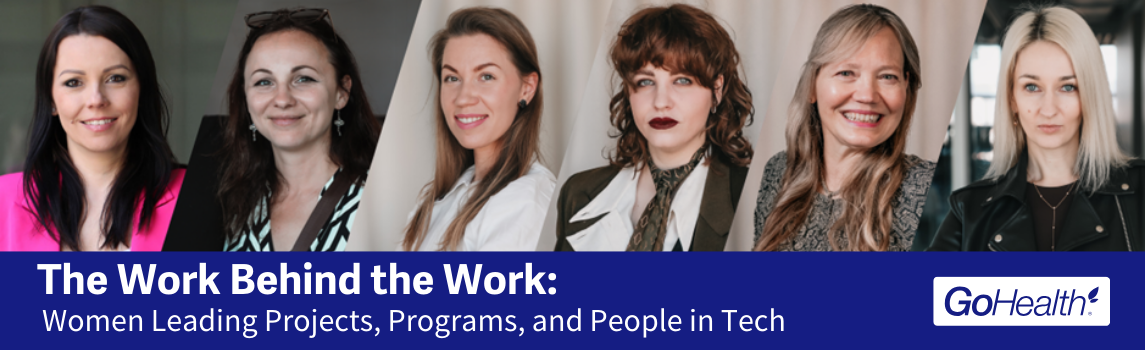
When people think about women in tech, they often think about code.
But technology doesn’t move forward on code alone. It moves because someone creates clarity in chaos. Someone aligns teams, stakeholders, and priorities. Someone keeps the bigger picture in focus while navigating the details.
For International Women’s Day, we spoke with GoHealth’s Technical Project Managers and Program Managers about what their work really looks like, what’s harder than it seems, and what leadership in tech actually means today.
If you had to explain what you do to a friend outside IT, what would you say?
Lenka: I attend meetings and herd cats. But professionally. I create space for brilliant experts to focus on their craft while I manage the chaos, conflicts, and cross-team battlefields so ships don’t sink. Sometimes I’m part air-traffic controller, part therapist. At the core, I help teams work better together and deliver tangible results.
Zuzka: Our business operates in the U.S. health-insurance space, which is complex. The program team I’m part of builds technology that simplifies the decision-making for customers, helping them choose the right health plan that best fits their needs. My focus is on designing scalable processes that align engineering, data, and business teams to drive efficiency and create measurable impact through our tech solutions.
Mariia: Project management is translating “This will take 2 days” into “This will take 2 weeks.” Reminding people of deadlines they set themselves and quietly updating the plan for the fifth time today. But seriously, it’s people management — building trust, aligning expectations, and making sure everyone knows what needs to be done and why.
Heather: My favorite PMI sweatshirt says it best: Chaos Coordinator, Cat Herder, Obstacle Obliterator, Maverick Multi-tasker, Guidance Guru and Guardian of Get-it-done… aka Project Professional!
How did you end up in IT and in project/program management? Was this the plan from the beginning?
Mirka: It was a happy accident. I graduated to become a teacher, but I never truly wanted to teach. I applied for an administrative role at a tech company and after a year was offered a project management position. I accepted, and I’ve been in project management ever since.
Lenka: It wasn’t a straight plan, it was evolution. I initially leaned toward psychology and counseling, but IT offered complexity, speed, intellectual challenge and just enough drama to keep my neurodivergent brain entertained. I realized I could combine empathy with structure and logical thinking to transform ambiguity into reliable execution.
Heather: Happy accident. Early in my career you had to decide whether you were going on the management or technical ladder. I refused to decide, but based on my 1000+ node, highly dependent schedule I was put into the management ladder. At the time the scheduling tool was designed to manage projects where resources were physical and delivered, like bricks for a building project — complete with graphical “tractors” to level resources over time. Many years later I moved back to the technical ladder just to prove that I could.
Ľubi: I worked in marketing for over seven years and collaborated a lot with project managers and developers. I was drawn to the principles and values of Agile development and the Scrum framework; particularly transparency, collaboration, honesty, openness, courage, and continuous improvement, which help teams align around a shared goal and ultimately led me to make the switch to IT project management.
Looking back, was there a moment that really shaped your career?
Zuzka: One turning point was overseeing the transition of our data engineering team into a broader product engineering organization. It required aligning people, expectations, and responsibilities while maintaining delivery. That experience pushed me from execution into strategic thinking and ultimately led to my growth into program-level leadership.
Lenka: Earlier in my career, I worked under managers who didn’t treat people with respect. I decided I wanted to lead differently — to prove that strong leadership can be sharp and human at the same time. That decision shaped everything that followed.
Mirka: Joining GoHealth after more than 12 years with my previous employer — during the COVID pandemic — was a big shift. I was part of a workforce reduction, but looking back, it became an opportunity for growth and a new chapter in my career.

What do you genuinely enjoy most about your work right now?
Zuzka: Working with the team. Everyone is collaborative and we move things forward together. I also appreciate having clear goals while being trusted with how to reach them. And the flexibility allows me to balance work with my parental responsibilities.
Lenka: Turning challenges into opportunities. Learning constantly. Helping others grow without pushing them into burnout. Sustainable excellence is more than a toxic hustle.
Mariia: The people I work with — that’s the most important part. And the product itself is ethical and aimed at helping elderly people make better decisions. That matters to me.
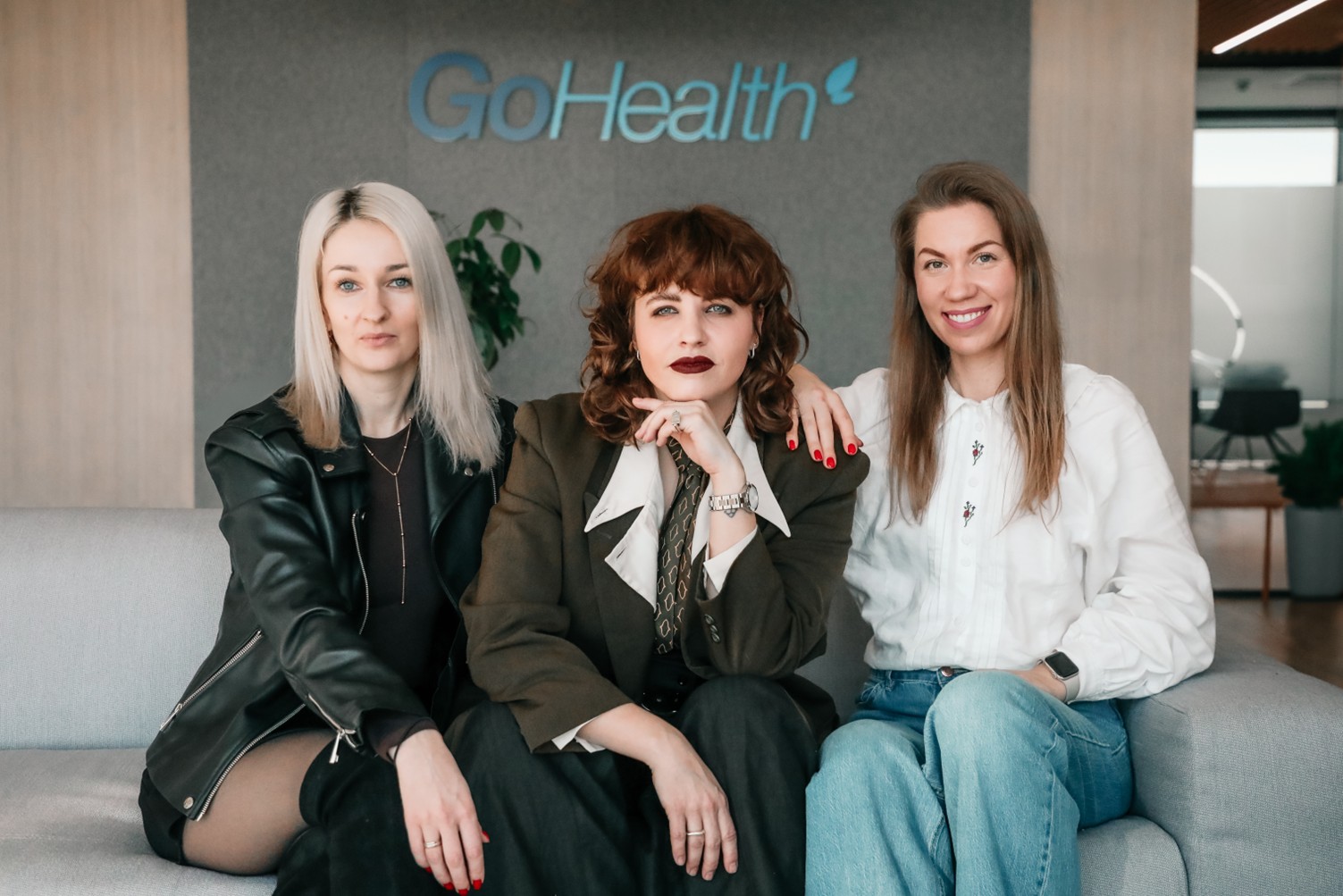
IT is still male-dominated. How does that feel from your perspective?
Lenka: Historically, women were pioneers in computing from early programming to WWII cryptography, when it was considered just a “clerical work”. Until prestige and money entered the narrative and shifted it. Today we’re still around 20–30% globally. Have I felt underestimated? Yes. Sometimes directly, sometimes indirectly. But I’ve learned to let results speak louder than bias. I lead with competence, clarity, and calm authority.
Zuzka: When I first joined the company, there were only three women in a team of thirty. Over the years, the ratio improved. In my case, early challenges were more about experience than gender. As my confidence and knowledge grew, so did the respect around me.
Ľubi: I do appreciate every gender, and I don’t feel intimidated by a male-dominated industry. In my experience, it ultimately comes down to one’s character, the values they follow internally, and the experiences and qualities they bring. Overall, my experiences have been more positive. While there have been setbacks related to gaps in experience or knowledge, I see them as valuable opportunities for learning and growth.
Heather: I feel very fortunate that I haven’t had bad experiences, especially given it was even more male-dominated in the late 80s and mid-90s when I started my career. I approach work with the mindset that we are all equals. I also have strong role models in my life, including my older sister who is in technology with a PhD in Computer Science. She helped instill confidence in my individual strengths and taught me early about the importance of things like gender-neutral language, reducing stereotypes, and leading by example.
What’s one thing you wish someone had told you at the beginning of your career?
Zuzka: Career growth is exciting, but it doesn’t define long-term happiness. What matters most is your time, your health, and your relationships. Work will always continue, you are replaceable. Your life outside of work isn’t.
Lenka: Never make it personal at work. Being stressed and overworked isn’t a badge of honor, it’s a waste of your life. Keep learning, keep evolving, but don’t sacrifice yourself for a job.
Mirka: No degree or certification alone teaches you how to be a great project manager. Experience matters the most.
Which skills turned out to be the most important — and which matter less than people think?
Ľubi: Working smart over working hard. Strategic thinking and understanding the “why” matter more than just being busy.
Mariia: Relationship building and trust are essential. Knowing everything upfront isn’t. Ask questions — people like helping people.
Mirka: Being detail-oriented and organized is essential, but what really matters is accountability and the ability to build strong relationships. Projects move forward when people trust each other and feel responsible for the outcome — not just their individual tasks.
What’s one part of your job that’s genuinely hard and doesn’t get talked about much?
Mirka: Accountability without direct authority. When projects run smoothly, nobody notices the effort. When something goes wrong, the visibility is instant.
Lenka: Switching mental contexts 20 times a day. Managing people who don’t want to be managed. And making sure nothing falls through the cracks.
Zuzka: Balancing a career with being a mom. There’s quiet pressure to “do it all” perfectly. The real challenge is accepting perfection isn’t realistic and choosing to protect your mental and physical well-being.
How do you know a project was truly successful beyond just delivering on time?
Lenka: Exactly, not just when it’s on time but when it delivers measurable value. Metrics, adoption, and impact are the real win. We’re getting better at building metrics and sharing success across pillars. 2026 will be exciting.
Zuzka: True success is the lasting impact it creates: improving efficiency, helping customers, creating value that continues beyond delivery.
Mariia: If people keep referring to it later as a good example and if it stays relevant, then you know it mattered.

How do you personally feel about AI in your work?
Zuzka: Helpful. It supports structuring ideas, polishing communication, and summarizing information. But it doesn’t replace critical thinking. It still requires context, judgment and experience.
Lenka: I feel excited, cautious, and curious at the same time. AI is a powerful tool and a great advisor, but it should never become the master.
Mirka: Mixed feelings. It increases efficiency, but it can also be misused. It lacks emotional intelligence and human judgment, so for me it remains a personal assistant.
Heather: Extremely helpful. I love it. It saves a huge amount of time by eliminating the need to start from scratch, whether it’s helping unblock a technical aspect of a project or even creating something fun like a photo at home
What advice would you give to women (or anyone) considering a career in IT or management?
Lenka: Don’t wait until you feel fully ready. Growth happens when you step outside your comfort zone. The water may have sharks, but what if you’re the growing great white?
Zuzka: Go for it. Seek mentors, ask questions, don’t be afraid to fail. And remember, taking care of yourself isn’t optional. It’s what allows you to perform long-term.
Ľubi: If you feel the inner calling, trust yourself. Enthusiasm will carry you through the learning stage, and you’ll find people willing to guide you.
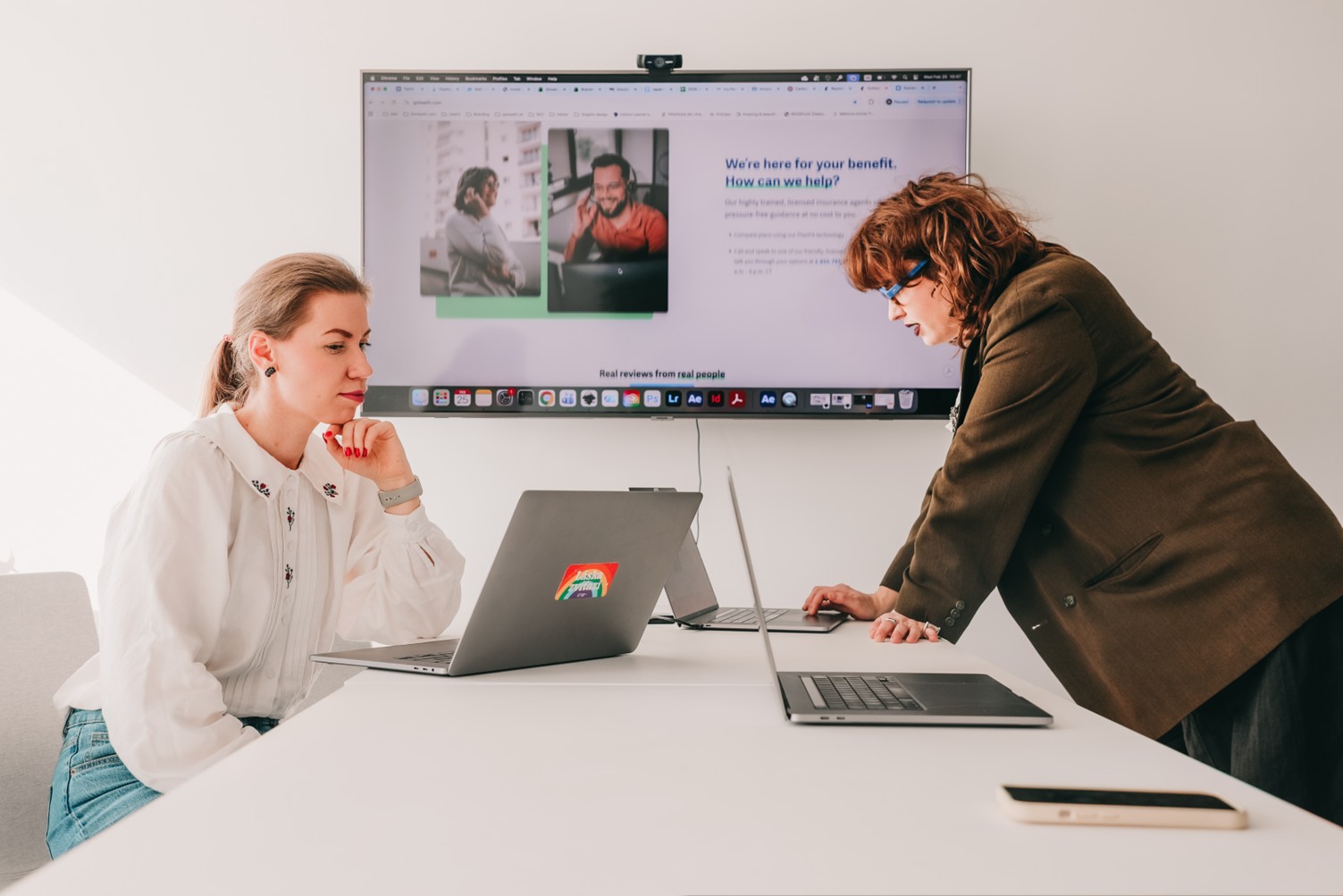
Finish the sentence: “One thing people often misunderstand about working in IT or management is…”
Mariia: That the hardest problems to solve aren’t technical — they’re human.
Lenka: That it’s not just technical. It’s communication, psychology, collaboration, and asking the right questions at the right time.
Ľubi: Success isn’t just built on advanced software and amazing reports. You can design the perfect system, but without trust and clarity, adoption will fail. Ultimately, technology doesn’t drive results; people do. Technical expertise is only half the battle; the other half is human-centric; creating the conditions and the buy-in that allow people to thrive alongside the technology.
If there’s one thing these conversations made clear, it’s this: project and program management in tech is deeply human work.
It’s structure and strategy, but also empathy.
It’s delivery and metrics, but also trust.
It’s technology, but ultimately, it’s people.
Maybe the real story of women leading in tech today is simpler than we think. It’s not about proving we belong. It’s about showing what leadership actually requires.
—